
Table of Contents
- What is a handfasting ceremony?
- What does handfasting symbolize?
- How to include handfasting in your elopement
- What you need for a handfasting ceremony
- Handfasting Ceremony Script (Simple + Meaningful)
- Handfasting Ceremony FAQ
What is a Handfasting Ceremony?
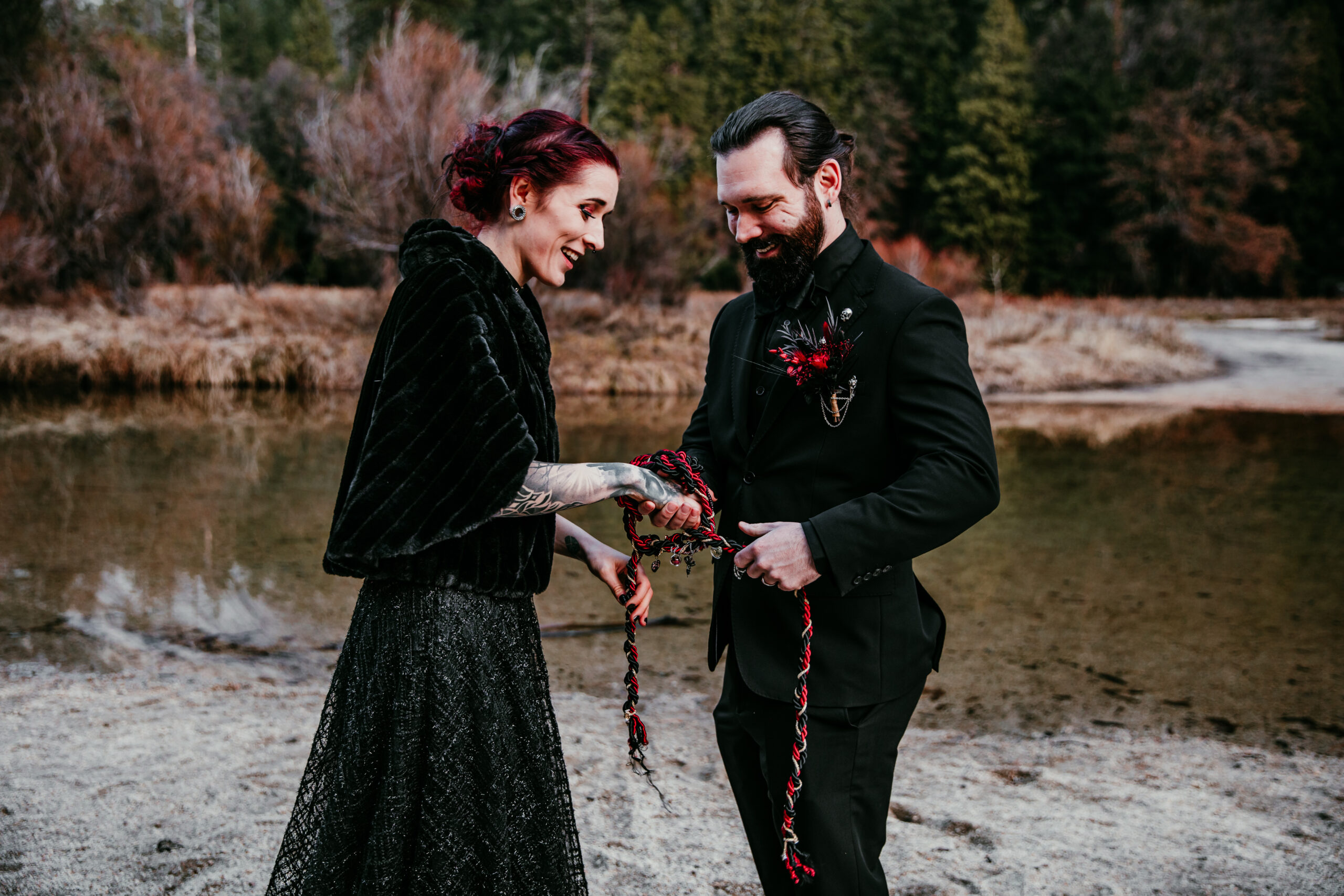
A handfasting ceremony is a symbolic ritual where a couple’s hands are tied together using a cord, ribbon, or fabric during their ceremony. It’s often where the phrase “tying the knot” comes from.
This tradition dates back to ancient Celtic weddings, but today it’s become a really meaningful way for couples to add intention and symbolism to their elopement day.
If you’re dreaming up a meaningful, non-traditional day, this is exactly why so many couples choose to elope in places like Lake Tahoe or Yosemite.
What Does Handfasting Symbolize?
At its core, handfasting represents unity, commitment, and the joining of two lives.
Each wrap of the cord can represent something different depending on what feels meaningful to you:
- Love
- Strength
- Unity
- Loyalty
- The life you’re building together
Some couples choose to say personal vows as their hands are wrapped, while others keep it simple and let the moment speak for itself.
How to Include Handfasting in Your Elopement
Handfasting works beautifully in an elopement because it slows things down and creates a really intentional moment.
Here are a few ways couples include it:
- During the ceremony right after vows
- As a private moment with just the two of you
- With a family member or officiant guiding the ritual
If you’re self-solemnizing (like you can in California), this is such a perfect way to create a meaningful ceremony without needing anything traditional.
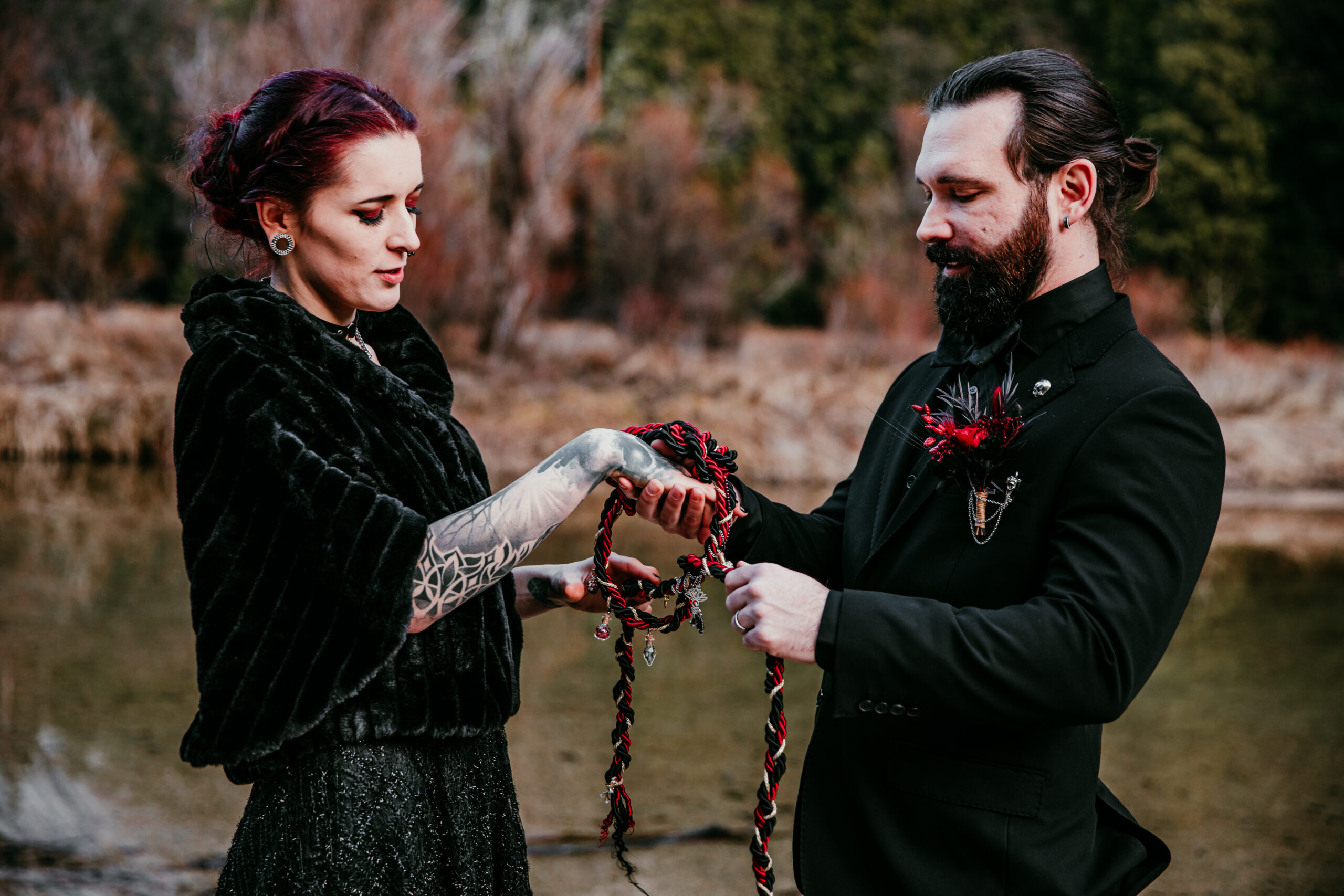
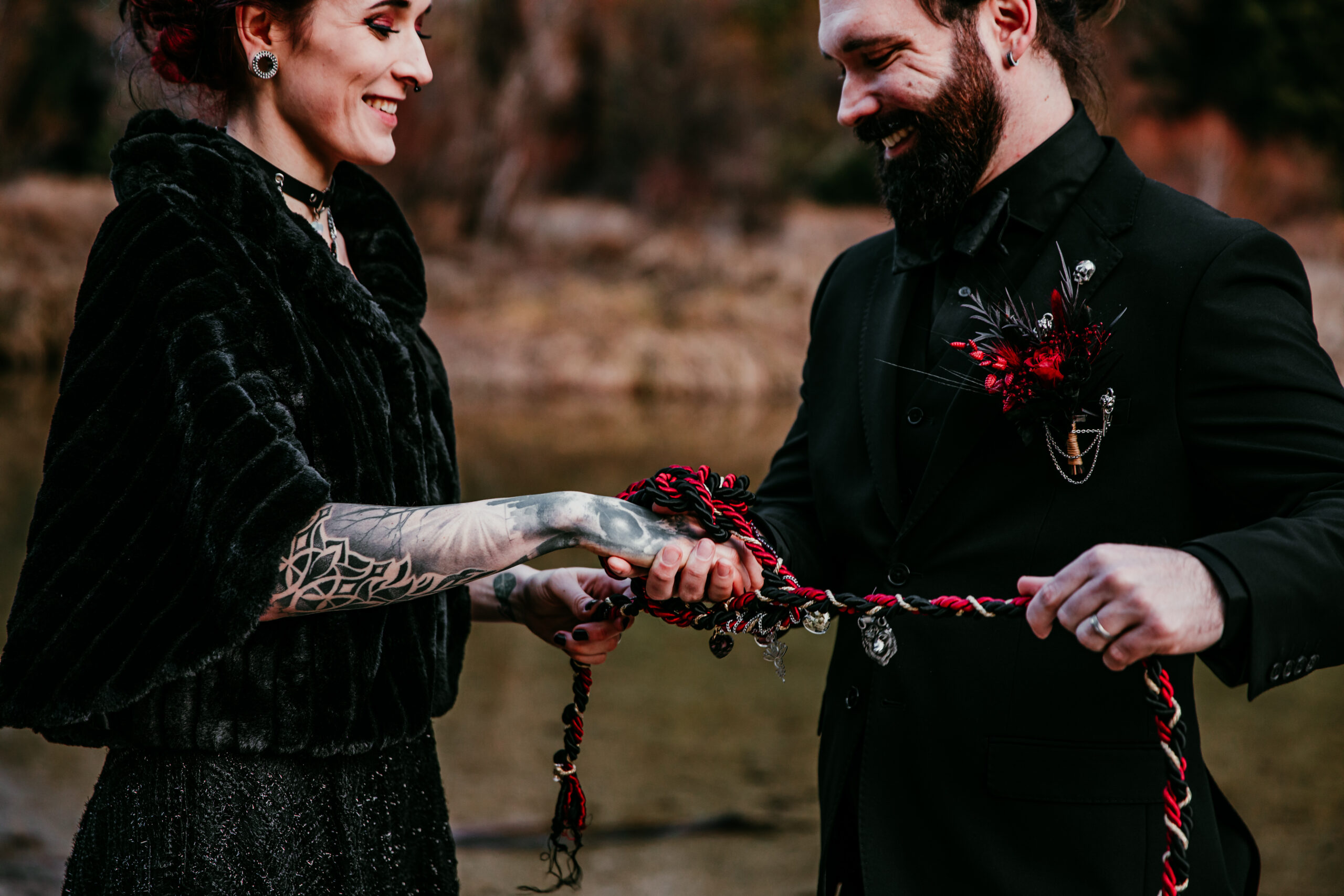
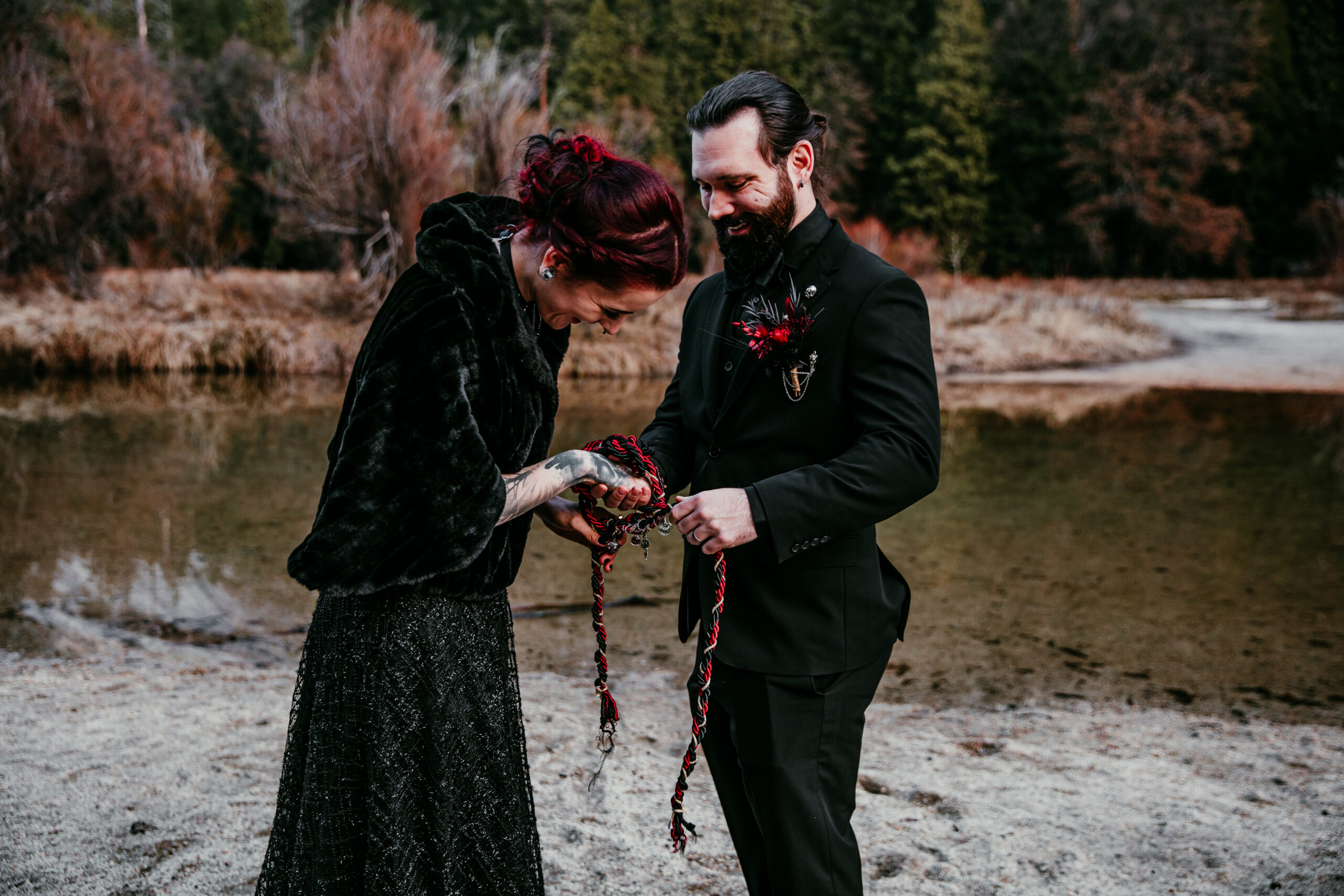
It also photographs really well—those close-up moments of your hands tied together always end up being some of the most emotional images from the day. If you’re planning your day and want help building a timeline that actually feels relaxed and intentional, you can start here.
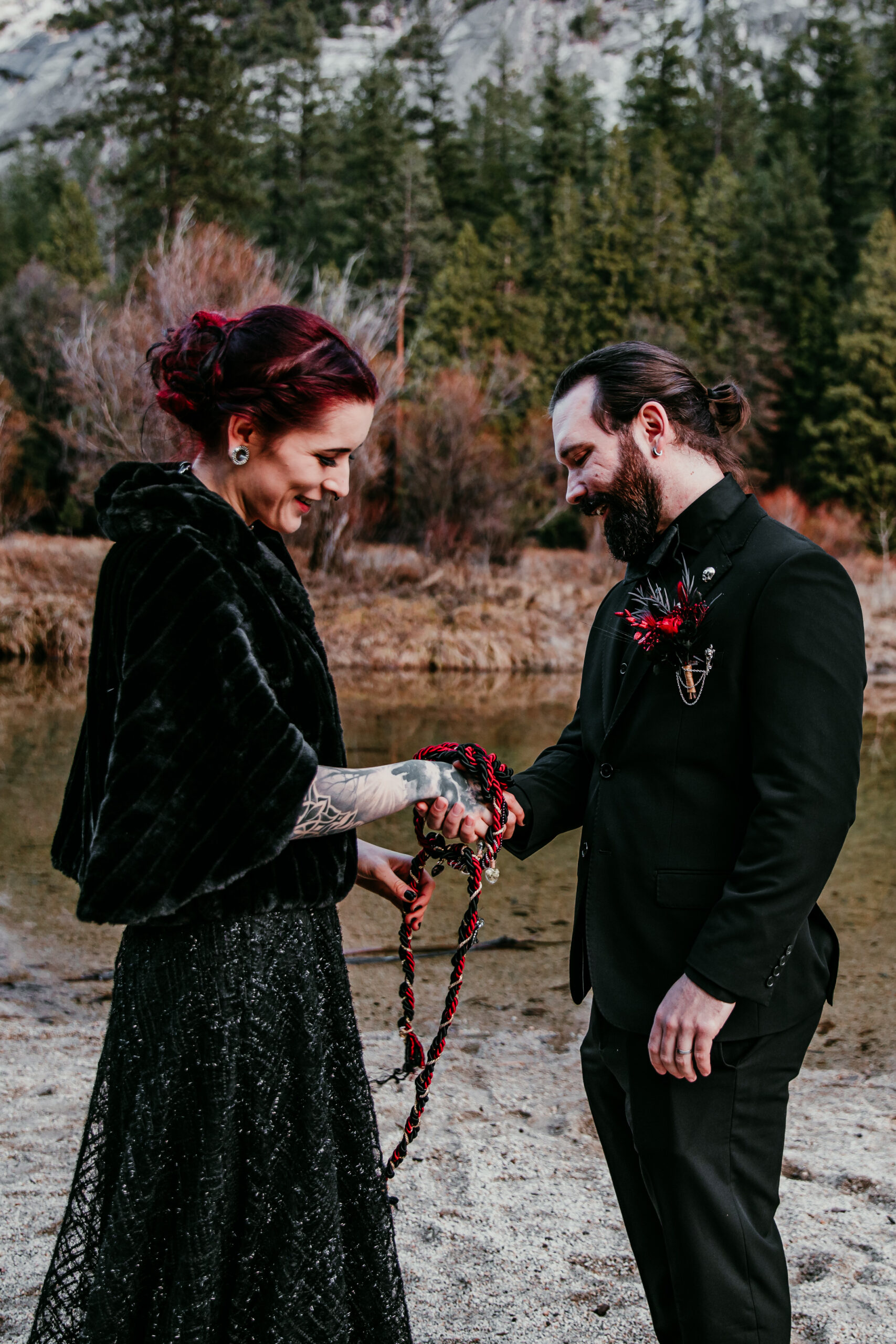
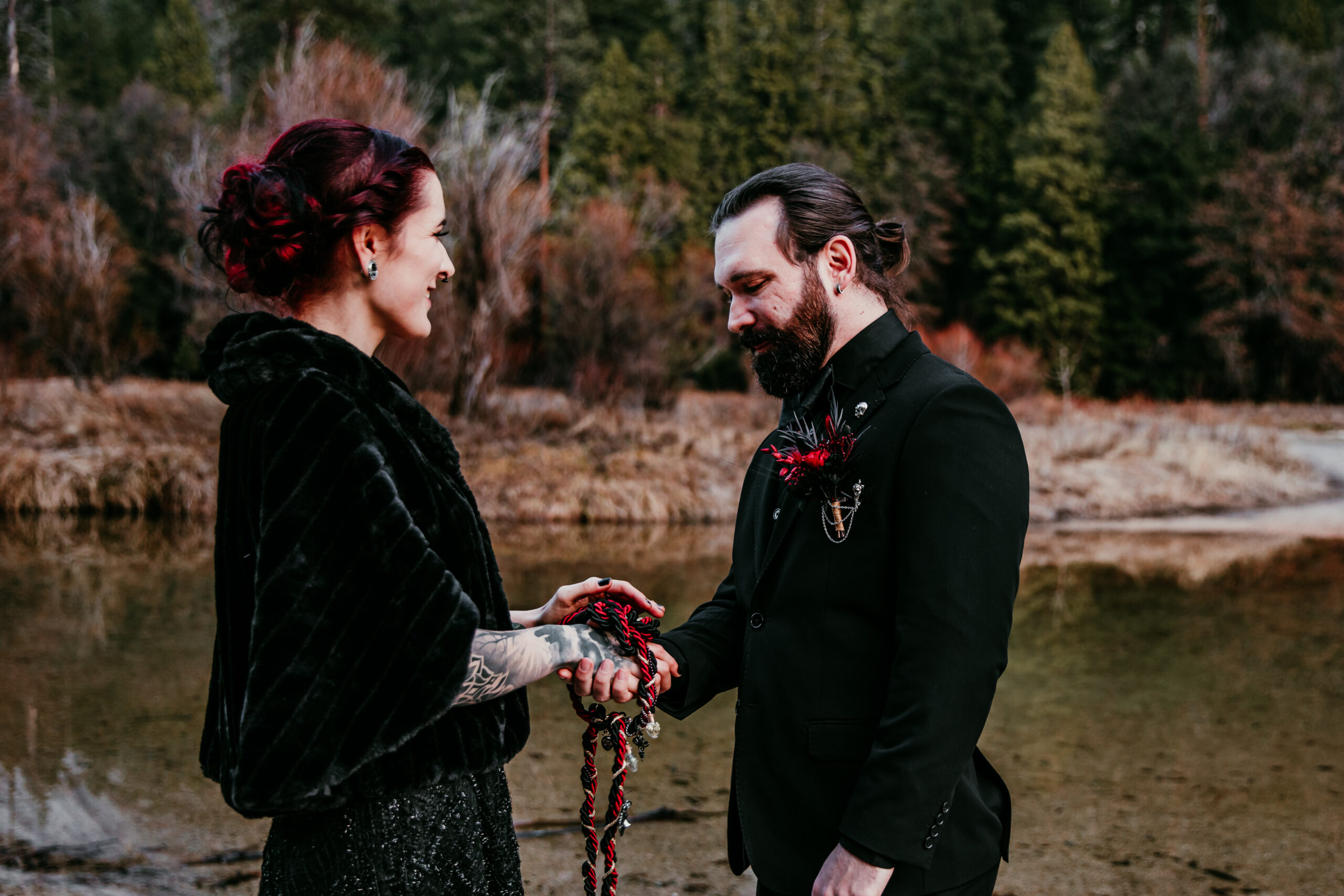
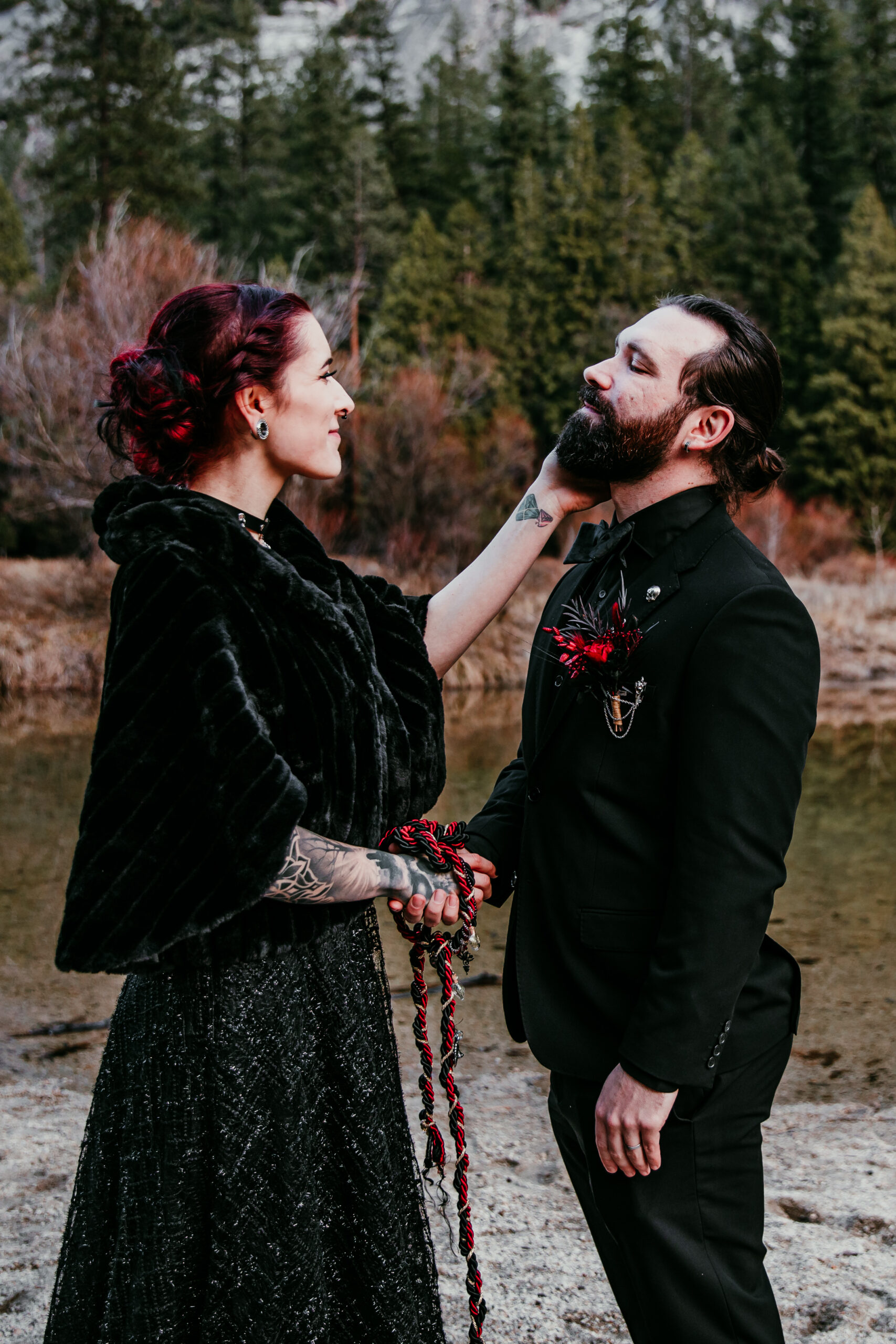
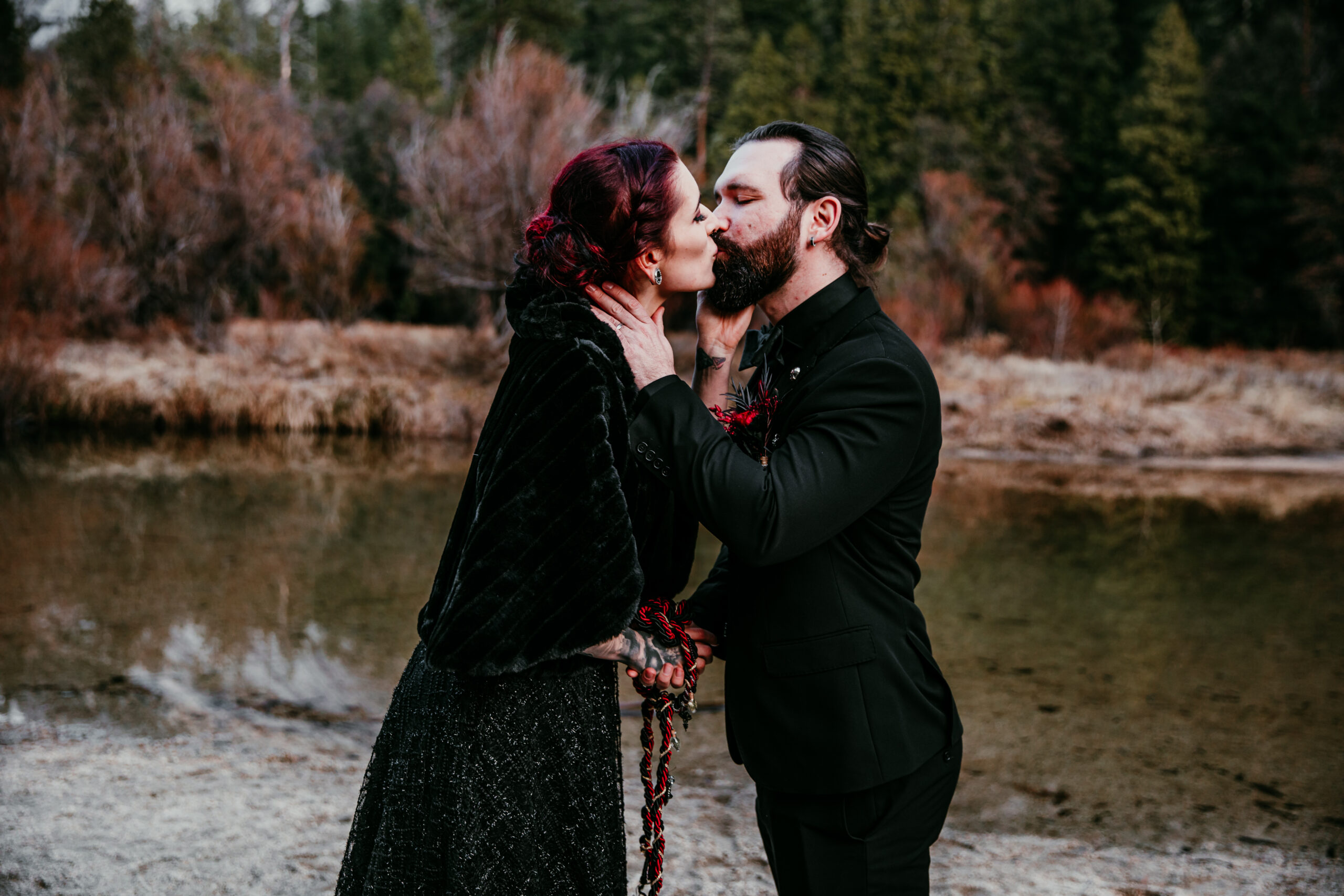
What You Need for a Handfasting Ceremony
You really don’t need much, which is part of why couples love it.
Here’s what to bring:
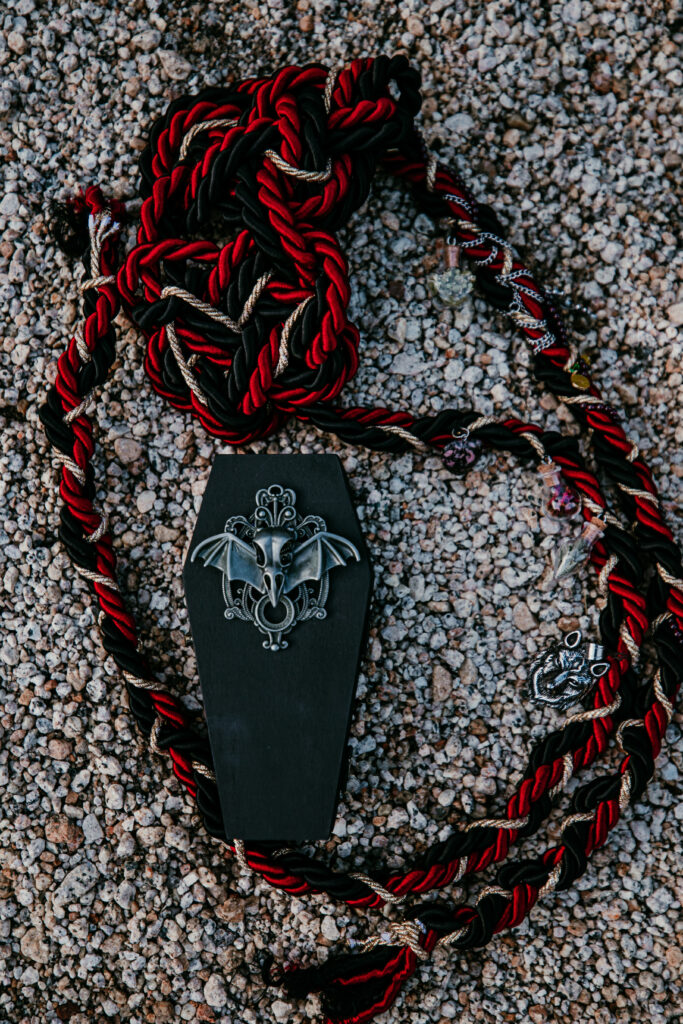
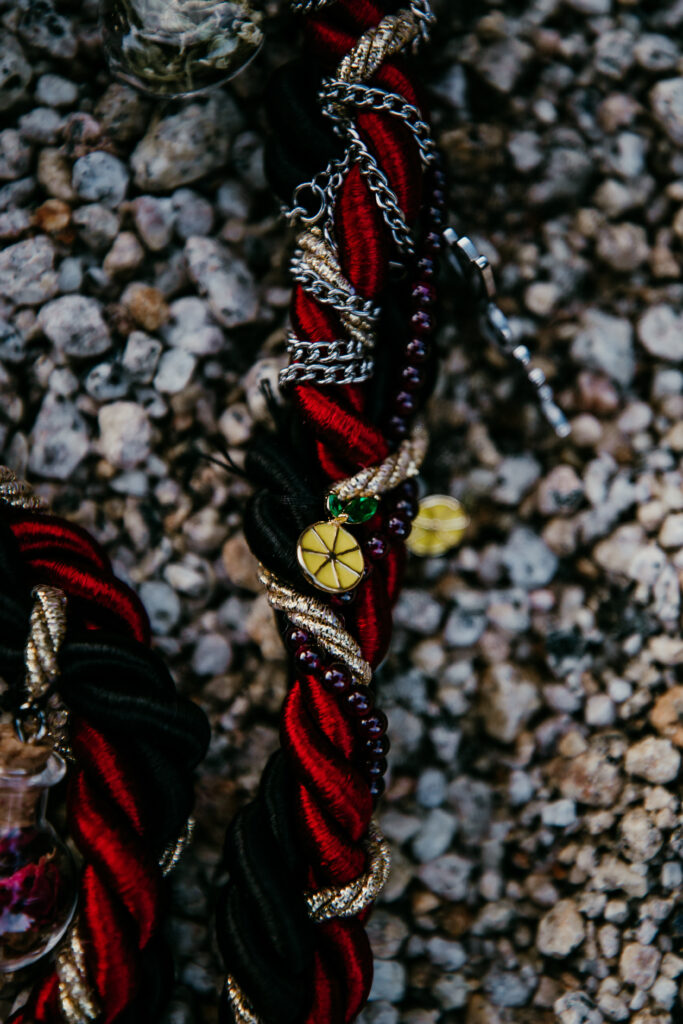
- A cord, ribbon, or fabric (you can match your colors or keep it neutral)
- Optional: multiple cords if you want each one to represent something different
- Optional: someone to guide the ceremony (or you can do it yourselves)
A lot of couples keep the cord afterward as a keepsake, which is such a simple but meaningful way to remember the day.
Handfasting Ceremony Script (Simple + Meaningful)
If you’re planning to include handfasting in your elopement, you don’t need anything overly formal. This can be as simple or as personalized as you want.
Here’s an easy handfasting ceremony script you can use as-is or tweak to fit your story:
Option 1: Officiated Handfasting Script
Officiant:
“Today, [Partner 1] and [Partner 2] choose to bind their lives together. This cord represents the connection they share and the promises they are making to one another.”
“As their hands are joined, so are their lives—built on trust, love, and the commitment to walk through life side by side.”
(Begin wrapping the cord around their hands)
“Each wrap of this cord symbolizes a promise.”
- “A promise of love”
- “A promise of strength”
- “A promise of unity”
- “A promise to grow together through all seasons of life”
Officiant (after wrapping):
“These hands will hold each other through the best moments and the hardest ones. They will build a life, a home, and a future together.”
“[Partner 1] and [Partner 2], may this binding remind you that your lives are now connected, your paths intertwined, and your love enduring.”
“You may now seal this with a kiss.”
Option 2: Self-Solemnizing Handfasting Script (Perfect for Elopements)
If you’re eloping without an officiant, you can guide this moment yourselves:
Partner 1:
“I choose you as my person, my partner, and my home. With this cord, I promise to stand by you, support you, and grow with you.”
(Wrap the cord once)
Partner 2:
“I choose you today and every day after. I promise to love you fully, to show up for you, and to build a life that feels true to us.”
(Wrap the cord again)
Together (optional):
“We tie this knot as a symbol of our connection, our commitment, and the life we are choosing to create together.”
(Pause, take it in, then kiss)
Pro Tip
Don’t stress about getting the words perfect.
Some of the best handfasting moments I’ve seen are when couples slow down, take a breath, and just be in it. Whether you follow a script or go completely off the cuff, this is one of those parts of the day that you’ll actually feel—and those are always the moments that matter most.
This is one of those moments that slows everything down and lets you actually feel your day instead of rushing through it.
If that’s the kind of experience you’re wanting, I’ll help you plan it all from start to finish.
Handfasting Ceremony FAQ
What is a handfasting ceremony?
A handfasting ceremony is a symbolic ritual where a couple’s hands are tied together using a cord or ribbon to represent unity and commitment. It’s where the phrase “tying the knot” comes from and is often included in modern elopements as a meaningful, non-traditional element.
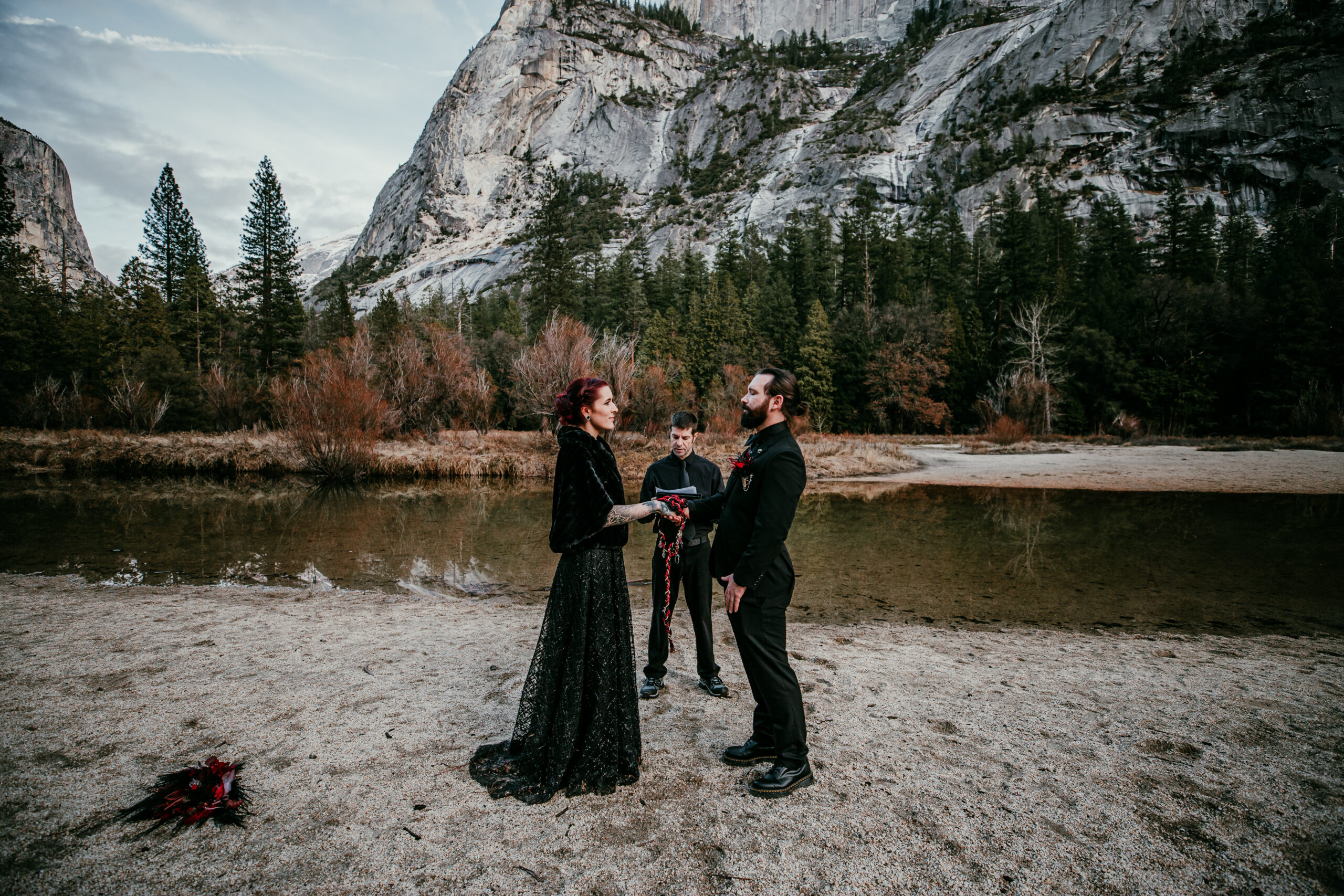
Handfasting ceremonies feel especially powerful in places that already feel a little magical—like standing in the middle of Yosemite with nothing but the mountains around you. If you’re dreaming about a ceremony like this in a national park setting, there are so many incredible options to choose from.
Do you need an officiant for a handfasting ceremony?
No, you don’t need an officiant.
If you’re eloping in a place like California where self-solemnization is allowed, you can perform the ceremony yourselves. Some couples also choose to have a friend or family member guide the moment, but it’s completely optional.
What do you say during a handfasting ceremony?
There’s no right or wrong way to do it.
You can follow a traditional handfasting ceremony script, say personal vows while your hands are being wrapped, or keep it simple with a few meaningful promises. The most important part is that it feels natural and true to you.
What do you use for handfasting?
Most couples use:
- A cord
- Ribbon
- Fabric or silk
You can choose colors that match your elopement, represent something meaningful, or keep it neutral. Some couples use multiple cords to symbolize different promises.
When do you do a handfasting ceremony?
Handfasting is usually done during the ceremony, either before or after vows.
Some couples also choose to make it a private moment just for the two of them, especially during an elopement where the timeline is more flexible.
Is a handfasting ceremony legally binding?
No, handfasting is symbolic.
It doesn’t replace the legal part of getting married—you’ll still need to sign your marriage license. Think of it as a meaningful addition to your ceremony rather than a legal requirement.
How long does a handfasting ceremony take?
Most handfasting ceremonies take about 2–5 minutes.
It’s a short but powerful moment that adds intention to your day without making your ceremony feel long or overwhelming.
Can you keep the handfasting cord?
Yes—and most couples do.
It becomes a really meaningful keepsake from your elopement day. Some couples display it in their home, while others keep it tucked away as a personal reminder of their vows.
Final Thoughts
If you’re looking for something that feels personal, intentional, and a little different from a traditional ceremony, handfasting is such a good option.
It’s simple, it’s meaningful, and it creates one of those quiet moments you’ll actually remember.
If you’re dreaming up an elopement that feels intentional, relaxed, and actually you, I’d love to help you bring it to life.

I'm Kristin Smith
hey there!
California Elopement Photographer, Planner & Designer
Helping you create a laid-back, intentional elopement in epic locations, without the stress.
learn more about me
elopement
packages and pricing
get in touch with me


